World.Brains.Mobi
Beautiful Earth, Skies and Space

Add this page to: Del.icio.us  Add this page to: Reddit  Add this page to: StumbleUpon  Add this page to: Yahoo  Add this page to: DIGG       
Download  Puzzles  Videos  Contact
Quote of the Day
"If you bring forth what is within you, it will heal you. And if you do not bring forth what is within you, it will destroy you." (from the Gospel of St. Thomas)
The Birth of Our Sun
The Earth and Sky
Our Solar System
The Milky Way Galaxy
The Endless Universe

Thoughtful Posts and Articles

By Anil Kumar Gupta
CEO @ HiTech-on-web.com
Twitter @hitechit

Get Google Newsfeed on the topic: The Milky Way Galaxy

Cracks and Ridges on Europa

Tibet Plateau High Desert

Crater Copernicus on Moon

Man Steps on Moon

Corona of Sun

Cartered Mercury

Galaxy NGC 3314A


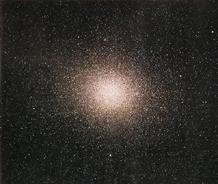
Omega Centauri Star Cluster

Galaxy NGC 3314A

Horsehead Nebula

Volcanic Regions

Comets Impact Sites on Jupiter

Globular Cluster NGC 6934

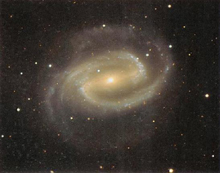
Galaxy NGC1365 1

Altostratus Clouds


Galaxy M1300

Earth and Moon

Space Ready Astronaut

CumuloNimbus Clouds

Comet Hits on Ganymede

Hubble Image of Nebula 2

Galaxy NGC1365 1


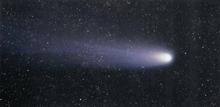
Halleys Comet from Australia

Volcanic eruption on Io Jupiters Moon

Clouds

Jetstream Clouds

Hubble Space Telescope image of Uranus

Cirriform Clouds

Parhelic Circle Cloud


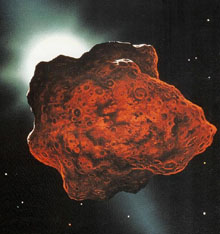
Asteroid Icarus orbits around sun

Viking Lander Photo of Mars

Life on Mars

Lauterbrunnen Valley Switzerland

Planets Orbits and Asteroid Belt

Quasar 3C 273

Quasar PG 0052 3


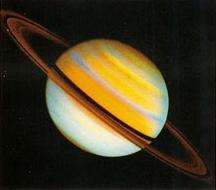
Rings of the Saturn

Brains.mobi

The Milky Way Galaxy


Magnificent galaxies of stars are dotted like islands through the sea of space.
Most prominent of the gas clouds is the Tarantula Nebula, at upper left, so named because of its spidery loops.
Starry Clouds of Magellan, the Large Magellan Cloud, resolves into a swell of starlight festooned with pink gas clouds. 
Most large galaxies have gaping Central Black Holes at their centers with mass between 100,000 and several billion times that of the Sun.
The Andromeda Galaxy, Over ten times farther off than the Magellan Clouds lies the great spiral in Andromeda: simultaneously the nearest large galaxy to us and the most distant object within reach of the human eye.
Swirling: A vortex of stars, gas and dusty sediments, M83 is an impressive spiral galaxy whose two main arms straighten at the center to create a bar.
Going with the flow: Gas flows along bars into the heart of barred spirals, where it makes new stars and enlarges the galaxy's central bulge.
Measuring the Universe: Unreachable though stars and galaxies may be, we can still find how far away they are. 
The penetrating glare of a supernova beams from the outskirts of the edge on spiral galaxy NGC 4526, rivaling the brilliance of the galaxy's entire nucleus.
Galactic collisions and mergers Galactic encounters are the most spectacular traffic accidents in the Universe. 
Luminous tails of stars and gas stretch 100,000 light years into intergalactic space from two intertwined spirals nicknamed the Mice.
Quasars are remote powerhouses which baffled astronomers for a generation following their discovery in the early 1960s. 
Looking deep into the Universe Remote galaxies glow with ancient starlight in view which reaches out through some 12 billion light years to the edge of the visible Universe.
The birth and- fate of the Universe For the first 380,000 years of its existence, the Universe was filled with an inferno of matter and energy disgorged by the Big Bang. As the Universe expanded the temperature of this incandescent broth steadily dropped.
When the Universe stop expanding then it will start to collapse.


Free Accounting/
Business Software Download
Free Web Page
Templates

Shopping Carts/
Payment Gateway

Online Business Management

Call Us     Email Us

  Terms of Use & Privacy Policy  

Created: Sunday, 5-April-2026
       (C) 2026 HiTech Computer Services